- Various Artists
-
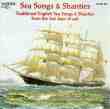 Sea Songs & Shanties [Saydisc]

- Stormy Weather Boys - Bob Roberts Time: 2:38
- Rio Grande [Shanty] - Fisherman's Group Time: 0:58
- Mister Stormalong [Shanty] - Bob Roberts Time: 1:39
- Warlike Seamen (The Irish Captain) - Bob Copper / Ron Copper Time: 2:32
- The Worst Old Ship (Waiting for the Day) - Bob Roberts Time: 1:44
- The Yarmouth Fisherman's Song - Harry Cox Time: 2:25
- Maggie May - Bob Roberts Time: 1:55
- Caroline and Her Young Sailor Bold - Sarah Makem Time: 3:29
- Whisky Johnny [Shanty] - Bob Roberts Time: 1:58
- What Shall We Do With a Drunken Sailor? - Fisherman's Group Time: 1:35
- Can't You Dance the Polka? [Shanty] - Bob Roberts Time: 1:38
- The Sailor's Alphabet - Clifford Jenkins Time: 3:31
- Haul Away Joe [Shanty] - Bob Roberts Time: 1:23
- Cruising Round Yarmouth - Harry Cox Time: 2:55
- Windy Old Weather - Bob Roberts Time: 1:52
- Farewell and Adieu (We'll Rant and We'll Roar) - Fisherman's Group Time: 1:21
- High Barbaree - Bob Roberts Time: 2:30
- The Liverpool Packet - Bill Barber Time: 0:50
- Little Boy Billy - Bob Roberts Time: 3:24
- Johnny Todd - Bob Roberts Time: 1:08
- The Banks of Claudy - Bob Copper / Ron Copper Time: 2:19
- The Bold Princess Royal - Bob Roberts Time: 2:02
- Jack Tar on Shore - Harry Cox Time: 2:00
- The Smuggler's Boy - Bob Roberts Time: 1:48
- The Smacksman - Tom Brown Time: 2:16
- Hanging Johnny [Shanty] - Bob Roberts Time: 1:22
-

In the days of the sailing ships these songs were not used solely for entertainment, as we might do today, but served as 'time-keepers', with the practical purpose of welding together a team of men in the working of their ship. Their singing ensured that they pulled ropes or worked pumps in rhythm and, of course, the words of the songs not only made the job seem shorter, but also gave an opportunity for improvising some verses in which it was permissible to 'let off steam' about the rest of the crew. The captain, the cook, the bosun, even the ship itself, frequently came in for vocal gibes, and it was only when the crew were faced with pirates, Frenchmen or Spaniards that the bosses might be awarded with more supportive praise.
Tunes and words were learned, as we say nowadays 'through the oral tradition', that is: they were passed on 'by word of mouth', and though they might have fundamental verses or refrains, the words were improvised to suit the length of time required to do a particular job. When songs were for work, they were usually known as 'Shanties' (or 'Chanteys'), but used for diversion, they would often be known as 'forebitters'—probably because they were sung while the crew were taking it easy, sitting on the 'bits'—the large wooden cleats to which the ropes were made fast—on the forward part of the ship.
Shanties were used for all kinds of shipboard tasks and were led by a shanteyman, selected for his sense of rhythm, and for a strong voice that could cut through the noise of the wind in the rigging. Long-hauls were for halliards, setting up sails, while the shorter hauls were for tightening or 'sweating up' the ropes. The longer, story songs were for jobs like working the capstan while weighing anchor or for pumping ship. When a shanty was used for a short haul—to tighten up the rigging—the pulls usually only came on certain key words sung by the chorus.
I recorded most of the singers on this album on location in the early fifties. At the time my aim was to capture on tape the last survivals of the older styles of song traditions and to publish and broadcast them to demonstrate that they survive best by hearing them sung, rather than being forced to sing them from a book at school with a piano accompaniment. Most of the singers I was recording at that time sang without accompaniment, but some of the country people still had old squeeze-boxes or accordions tucked away in their sheds and attics and it wasn't long before these were being dusted-off for accompanying songs and step-dancing.
I myself started singing sea songs with the 'melodeon' (button accordion) on the radio in the early fifties and it was only a matter of a few years before a number of country singers, particularly in East Anglia and Cornwall, were doing the same.
Perhaps the first to do this was the well-known sailing journalist, A.W. 'Bob' Roberts. This was at the time when he changed from sailing yachts round the world, and writing about his adventures, to skippering sea-going working barges on London river and the Thames Estuary. Bob Roberts gave up his job on the East Anglian Daily Times in Ipswich and took over The Cambria, the last of the working 'Spritsail' barges that was still carrying cargo.
My radio and TV programmes featuring Bob aboard these Thames barges soon brought him to public attention and, until his death at the age of 74 in 1982, he was much in demand for nautical gatherings and festivals.
The songs of the Copper family of Rottingdean, near Brighton on the Sussex coast, were the first songs in the very first journal of The Folk-Song Society at the beginning of the century, However, their glee-style way of harmonising in two vocal parts did not attract musical attention until they were featured on radio programmes like 'Country Magazine' and my own weekly 'As I Roved Out' series in the early fifties. Although most of their songs were about ploughmen and shepherds, through the radio programmes and the availability of recordings, their Claudy Banks and Warlike Seamen soon became popular chorus songs in the regular repertoire of folk clubs in England from the sixties up to the present day.
In the thirties, Norfolk singer, Harry Cox, similarly featured in the Society's journals, also became a respected source of sea-songs. His father had been a herring fisherman out of Yarmouth and Harry had been squeezed into a corner of his local 'pub' (public house or tavern) listening to them at an early age. One of the many hardships endured by these men, that of net-cable-entanglement, is well described in The Yarmouth Fishermen's Song, as is the lot of the sailor offering drinks all round at the village pub in Jack Tar On Shore.
The fishermen in Cornwall not only operated out of harbours, but also pushed their boats out from coves along the rocky shoreline. In the fifties they were entertaining holiday visitors with the more well-known songs and shanties in their 'local' at Cadgwith, near the Lizard. On the occasion that I recorded them in 1956, they were led by Bill Barber, from St Mary's in the Scilly Isles, where I had already been tape-recording the lifeboat-fisherman, Clifford Jenkins.
Tom Brown, on the other hand, although he learned The Smacksman from traditional singers in Norfolk, like Harry Cox, who sang only at home or in the local pub, was now singing them more widely in the folk clubs in the sixties and seventies.
Sarah Makem from Keady in County Armagh, was one of the most outstanding natural 'home' singers I came across in Northern Ireland, and it was her singing that provided the signature tune for our weekly 'As I Roved Out' programmes. It was the effect of my coming into her home and having to follow her round her kitchen with my microphone and then putting these recordings out on the BBC radio programmes in 1952 that fired her son, Tom, to respect his mother's songs and eventually to join the group of Irish singers/actors, The Clancy Brothers, performing family songs like Sarah's Caroline and Her Young Sailor Bold.
© PETER KENNEDY, The Folkstudio,
Gloucester, 1993.